

Respiratory Viruses (COVID, Flu, RSV)
Respiratory viruses are viruses that cause illnesses in the respiratory system. These illnesses share similar symptoms, risk factors, and prevention strategies. Each year, respiratory viruses such as influenza (flu), COVID-19, and respiratory syncytial virus (RSV) cause hundreds of thousands of hospitalizations and thousands of deaths during the fall and winter virus season.
Symptoms
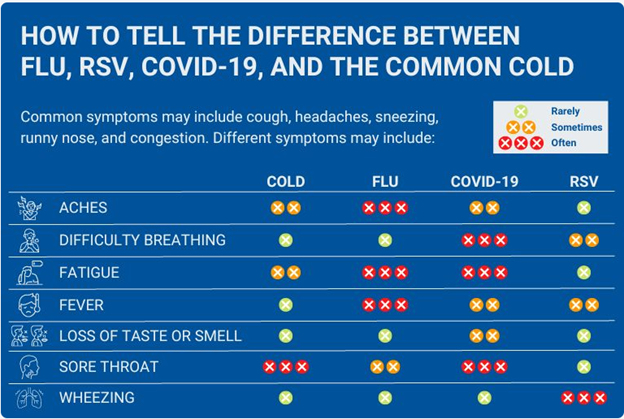
Respiratory viruses may cause both upper respiratory tract symptoms (the vocal chords and above) and lower respiratory tract symptoms (below the vocal chords). Some viruses also affect the nose, throat and lungs, and can lead to serious lung infections, such as pneumonia.
Examples of respiratory virus symptoms:
|
|
If you have an emergency warning sign (like trouble breathing or chest pain), seek emergency medical care immediately.
What to do when you test positive for COVID-19, Flu, RSV
AUCC follows CDC guidance for respiratory illnesses, including COVID-19, influenza (flu), and RSV. If you test positive or become sick with a respiratory illness:
- Stay home and away from others while you are sick.
- You may return to normal activities when, for at least 24 hours, both of the following
are true:
- Your symptoms are improving overall; and
- You have been fever-free without the use of fever-reducing medication.
- After returning to normal activities, take additional precautions for the next 5 days
to reduce the risk of spreading illness to others. Precautions may include:
- Wearing a well-fitting mask when around others indoors.
- Improving ventilation and indoor air quality.
- Practicing good hand and respiratory hygiene.
- Keeping physical distance from others when possible.
- Considering testing before being around others, particularly individuals at higher risk for severe illness.
If your fever returns or your symptoms worsen after you resume normal activities, stay home again until your symptoms are improving and you have been fever-free without fever-reducing medication for at least 24 hours.
What to do when you are sick
CDC recommends when people get sick with a respiratory virus (COVID-19, flu, RSV) that they stay home and away from others.
- You can go back to your normal activities when, for at least 24 hours:
- Your symptoms are getting better overall, and
- You have not had a fever (and are not using fever reducing medication).
- When you go back to your normal activities, take added precaution over the next 5 days, such as wearing a mask, hygiene, physical distancing and/or testing when you will be around other people indoors.
Preventing Respiratory Viruses
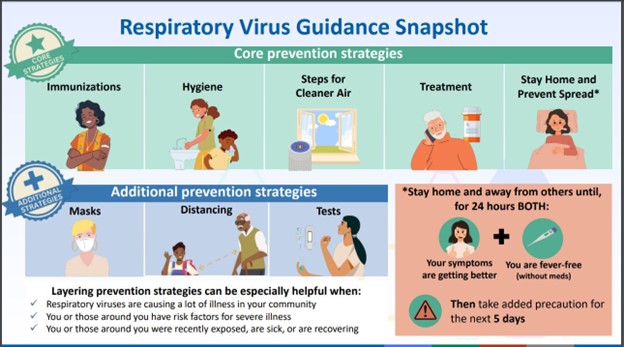
CDC recommends that people use core prevention strategies. These are important steps you can take to protect yourself and others:
- Staying up to date with vaccination to protect people against serious illness, hospitalization, and death. This includes flu, COVID-19, and RSV if eligible.
- Practicing good hygiene by covering coughs and sneezes, washing or sanitizing hands often, and cleaning frequently touched surfaces.
- Taking steps for cleaner air, such as bringing in more fresh outside air, purifying indoor air, or gathering outdoors.
Pharmacies and Clinics near AUCC for Immunizations
| Neighborhood Union Health Center | Walmart Pharmacy | CVS Pharmacy |
| 186 Sunset Avenue NW Atlanta GA 30314 |
835 M.L.K. Jr Dr NW Atlanta, GA 30314 |
895 Ralph David Abernathy Blvd SW Atlanta, GA 30310 |
| 770-520-7351 | 404-460-2703 | 404-755-1511 |
| 8:30-5PM, Mon-Friday (closed Sat and Sun) |
9AM-7PM, Mon-Sat 10AM-6PM, Sun |
9AM-9PM, Mon-Sat 10AM-9PM, Sun (closes 1:30-2PM for lunch) |
CDC’s Respiratory Virus Guidance
- AUCC Respiratory Virus Health and Safety Guidelines
- Immunizations for Respiratory Viruses
- Hygiene and Respiratory Virus Prevention
- Taking Steps for Cleaner Air for Respiratory Virus Prevention
- Preventing Spread of Respiratory Viruses When You’re Sick
- Masks and Respiratory Virus Prevention
- Physical Distancing and Respiratory Viruses
- Testing and Respiratory Viruses